Java4Shell and NGINX2Root vulnerabilities: what to do

Two critical bugs landed this week: Java4Shell in the JVM and NGINX2Root in nginx. Every DollarDeploy server runs nginx with HTTP/2, and Java apps run on the JVM, so here is what to do in DollarDeploy, step by step.
Why it matters: both bugs can lead to remote code execution without a login. No attacks in the wild were reported at the time of writing, but patch before that changes.
The short version
- All servers: switch nginx to the nginx.org packages by adding
NGINX_INSTALL_SOURCE=upstreamto the server env vars and running Prepare server. - Java apps: pin a patched JDK in
.sdkmanrcand redeploy your app. - Check: run a host inspection to confirm the nginx and Java versions.
nginx: NGINX2Root
What is affected
Five nginx bugs were disclosed on November 18. The fixed releases are nginx 1.30.7 (stable) and 1.31.9 (mainline). Two of them hit the config DollarDeploy generates:
| CVE | What breaks | DollarDeploy servers |
|---|---|---|
| CVE-2026-123007 | HTTP/2 memory corruption, code execution | Affected, HTTP/2 is on for HTTPS apps |
| CVE-2026-123633 | HTTP/2 use-after-free, code execution | Affected, nginx proxies to your app |
| CVE-2026-123634 | DNS resolver use-after-free | Not affected: the generated config proxies to a fixed address and has no resolver or mirror |
| CVE-2026-121810 | HTTP/3 bug | Not affected, HTTP/3 is not configured |
| CVE-2026-113425 | Mail proxy bug | Not affected, the mail proxy is not used |
If you edited the nginx config on the server by hand, check it against the self-hosting notes below.
Why the OS update does not help yet: DollarDeploy installs nginx from the OS repo by default. Ubuntu 22.04 and 24.04 ship nginx 1.18 and 1.24, and Debian 11, 12 and 13 ship 1.18, 1.22 and 1.26, all affected. At the time of writing neither Ubuntu nor Debian has shipped a fix.
What to do in DollarDeploy
- Open the server, add
NGINX_INSTALL_SOURCE=upstreamto its env vars, and run Prepare server. It switches the server to the official nginx.org repo and installs the fixed stable release. Laterapt upgraderuns keep pulling nginx.org releases. Your apps and their HTTPS configs stay the same. - Run a host inspection. The Ports section shows
nginx.version(expect1.30.7),nginx.source(nginx.org) andnginx.http2. - Repeat for every server.
If you prefer to stay on the OS package: automatic security updates install the Ubuntu or Debian fix once it ships, and every Prepare server run applies pending upgrades too. Until then the server stays exposed. Ubuntu backports fixes into versions like 1.24.0-2ubuntu7.x, so check the package version in the inspection, not the nginx version. Treat 1.24.0-2ubuntu7.13 and older as vulnerable.
Yes, but: turning off HTTP/2 by hand also blocks both bugs, but the next deploy of the app turns it back on. Use the nginx.org switch instead.
Java: Java4Shell (CVE-2026-114938)
What is affected
The JVM has a fast Base64 decoder for x86-64 CPUs with AVX-512 VBMI. On crafted input it can write past its buffer before Java rejects the input. The result is a crash or code execution. CVSS 8.1.
- Exposed: Java apps on x86-64 servers with AVX-512 VBMI that decode Base64 from requests. Common sources: JWTs, Basic auth headers and files sent as Base64 in JSON.
- Not exposed: ARM64 servers (Hetzner CAX, AWS Graviton), which never run this code, and Java 8 and 11.
- Fixed in: 17.0.21.1, 21.0.13.1, 25.0.5.1 and 27.0.1.1, for OpenJDK, Oracle and Temurin (the build SDKMAN installs as
-tem). Temurin publishes the binaries as testing completes, track them in the release status issue.
What to do in DollarDeploy
- Redeploy every Java app. Since release 1.69.0, Java apps deploy with the recommended workaround by default:
JAVA_TOOL_OPTIONS="-XX:+IgnoreUnrecognizedVMOptions -XX:-UseBASE64Intrinsics"
It turns off the fast decoder. If you already set JAVA_TOOL_OPTIONS in the app env, we leave it as is, so add these two flags to your value yourself. To opt out, set JAVA_TOOL_OPTIONS to an empty value.
- Pin a patched JDK. Add or bump
.sdkmanrcin the root of your GitHub repo, then redeploy:
java=21.0.13.1-tem
For other major versions use 17.0.21.1-tem, 25.0.5.1-tem or 27.0.1.1-tem. Check the exact name in sdk list java: a build appears there once Temurin has published it. Without .sdkmanrc, a deploy can install SDKMAN's newest default Java, which may be a new major version.
- Docker Compose Java apps: the default does not reach containers. Bump the base image to a patched version once it is on Docker Hub (Temurin images follow after all binaries of a version are out), and add
JAVA_TOOL_OPTIONSto the service'senvironment:in the compose file, then redeploy. - Run a host inspection. The Apps section shows the Java version each app runs on.
Yes, but: the flag is a stopgap. The patched JDK is the fix.
Minor: block the SCTP kernel module
A separate Linux kernel bug in SCTP can turn code execution in nginx into root. Almost nothing uses SCTP. Until the kernel is patched, block the module on each server:
echo "install sctp /bin/true" | sudo tee /etc/modprobe.d/disable-sctp.conf
sudo rmmod sctp 2>/dev/null || true
If you self-host without DollarDeploy
nginx:
- Upgrade to 1.30.7 or 1.31.9 from the nginx.org packages, or wait for your distro's fixed package.
- Until then, turn off HTTP/2: remove
http2 on;(orhttp2on thelisten 443 sslline), thensudo nginx -t && sudo nginx -s reload. Browsers fall back to HTTP/1.1. - Use fixed upstreams: a
proxy_passwith a variable (likehttp://$host) plusresolverandmirroror SSI is exposed to CVE-2026-123634. Point it at anupstreamblock. - Remove what you do not use: HTTP/3 (QUIC) listeners and the mail proxy.
- Rate limiting does not help:
limit_reqcounts requests, and the HTTP/2 attack uses flow-control frames. - Behind a CDN: lower risk if the server talks HTTP/1.1 to the CDN and accepts connections from the CDN only.
Java:
- Check the CPU:
grep -c avx512vbmi /proc/cpuinfo.0means not affected. - Update the JDK to 17.0.21.1, 21.0.13.1, 25.0.5.1 or 27.0.1.1, or your vendor's November build.
- Until then, add the flags above to
JAVA_TOOL_OPTIONSfor every JVM and restart it. Running JVMs keep the old code until restart.
The bottom line: in DollarDeploy, it is one env var and Prepare server per server, and a redeploy plus a pinned JDK per Java app.
Go deeper:
- nginx security advisories
- Ubuntu CVE tracker: CVE-2026-123007
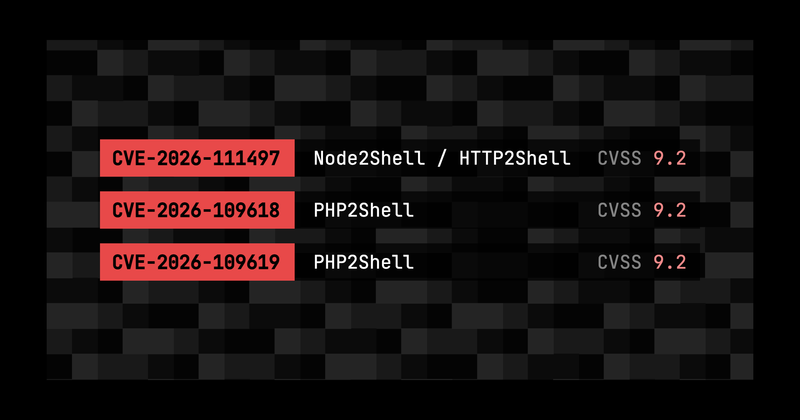
- Node2Shell, HTTP2Shell and PHP vulnerabilities: what to do
- Eclipse Temurin guidance for Java4Shell
- DollarDeploy predefined variables
Questions? Write to us at hello@dollardeploy.com.
Deploy to your own server with automatic HTTPS, monitoring and backups. No Docker, no lock-in. Try DollarDeploy.
Keep reading
Keep reading

Leaving DigitalOcean App Platform: a migration checklist for a small team
Web service, worker, database: map each App Platform component to one server you own, then switch in one short maintenance window.

Backups for a small startup: what to keep and how to test a restore
What to back up, how often, where to keep it, and the 30-minute monthly restore test that tells you a backup actually works.

Leaving Fly.io: a migration checklist for a small team
Running one app in one region on Fly.io? Map Dockerfile, Machines, volumes, Postgres and cron to a server you own, then switch in one short maintenance window.